 Morning Read
The Refund on This One-Ounce Bottle Is Measured by What Is Left Inside.
Plant Therapy of Twin Falls, Idaho, gives ninety days on a five-herb liquid extract, opened or not. I held the bottle up to my kitchen window and planned a test that fits inside those terms.

This is a paid advertisement. Sponsored by Plant Therapy, Inc.

Harold Vance is the pen name of this desk.
Everything on this page about the bottle comes from the seller's product page, its label, its return and contact pages and its public review system, all read on September 21, 2026.
The customers quoted further down are real and their words are public on the seller's own page.
The small pictures beside them are illustrations, not the reviewers.
I read everything at the kitchen window.
The light is better there than anywhere else in the house, and I have done it for forty years.
Contracts, seed catalogs, the county paper, the back of every box that comes into this kitchen.
If it has small print, it gets read at the sink with the morning coming in over my shoulder.
I spent twenty-six years behind the parts-and-service counter of a farm-equipment dealer.
Half of that job was reading warranty terms out loud to men who had signed them without reading them.
So when a small amber bottle of herbs landed on my windowsill last week, I did what the job taught me.
I read the return terms before I read the label.
The label tells you what a company hopes. The return terms tell you what it will actually do.
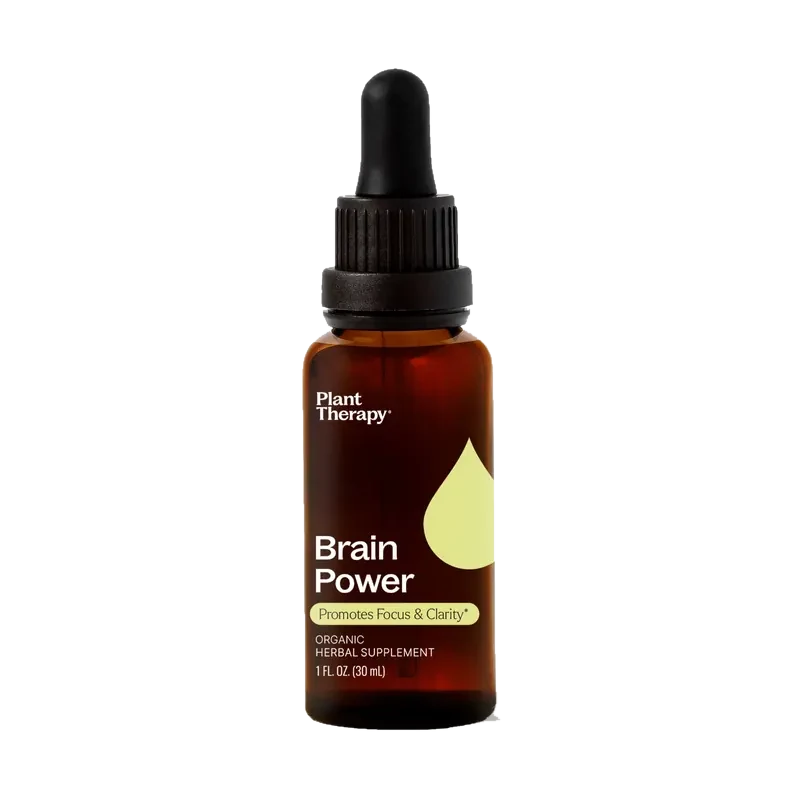
The bottle is Brain Power, an organic herbal supplement from Plant Therapy, a company in Twin Falls, Idaho.
It is one fluid ounce of a liquid extract, five herbs in vegetable glycerin, with a glass pipette in the cap.
Its return window is ninety days.
That is three times what most of this business offers, and I will say so plainly before I say anything else.
But one clause in those terms changes how a man should use the ninety days.
It is printed in plain words and it is not unfair, and almost nobody will read it twice.
With an opened bottle, the refund is measured by what is left inside it.
Think about what that means for a test.
Every morning you take a serving, the level in the bottle drops, and so does the amount the terms promise to send back.
A long window is only worth what you still have in the bottle when you decide.
That one sentence is why this page exists.
The rest of it is arithmetic, a calendar and five herbs.
I put the length of every study of those herbs beside the ninety days, and I wrote out three ways to run a test that the terms actually protect.
Four Sentences of Return Terms, Read One at a Time
The seller's return page is short.
The part that applies to a bottle like this one is four sentences long, and I copied them onto a card and taped it to the window frame.
The card itself, word for word, comes further down this page, where the questions it leaves open are.
Here the four sentences are in my own words: ninety days from purchase, opened bottles accepted, a refund that follows what is left, and store credit after the ninety.
Now take them one at a time, the way I would across the counter.
The first sentence sets the clock.
Ninety days, and the clock starts at the date of purchase, not the date the box reaches your porch.
That difference is small and real.
If the package spends five days on a truck, five of your ninety are gone before you break the seal.
The second sentence is the generous one.
Opened is fine, used is fine, and that is rarer than it should be; most return windows close the moment the seal is broken.
But read the end of it slowly.
"A partial to full refund based on the amount of product remaining."
Full, if the bottle comes back full.
Partial, if it comes back partly used, and the page does not print how the partial amount is worked out.
The third sentence is the soft landing.
After ninety days you are not refused; you are given credit on your account for the amount of the return, which you spend in the same store.
The store sells a great deal besides this bottle, so credit is not nothing.
But credit is not money back, and a man should know which of the two he is counting on.
The fourth sentence is housekeeping.
The return starts with a form on the seller's site, and the seller asks for up to two business days to process it.
Four sentences. A clock, a measure, a soft landing and a form.
I circled the day I paid on a paper calendar and pinned it next to the card.
I counted ninety squares from that circle and drew a second circle there.
Everything on this page happens between those two circles.
Why the Level in the Bottle Is the Number That Matters
Most people think of a return window as a length of time.
With this one, it is really a length of time and a volume of liquid together.
The time runs out at ninety days whatever you do.
The volume runs out one serving at a time, and you are the one who spends it.
So there are two gauges on this purchase, not one.
The calendar on the window frame, and the level of the liquid in the amber glass.
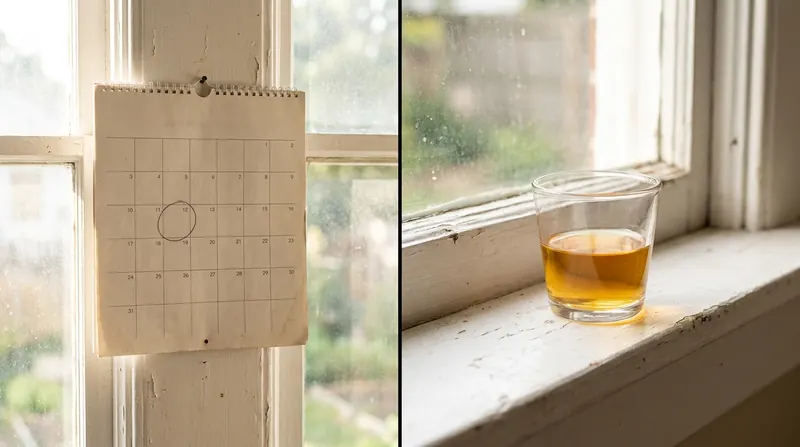
Amber glass is dark, but not so dark you cannot read it against a bright window.
Hold it up to the morning light and the line of the liquid shows through clearly.
Put a strip of plain paper tape down the side of the bottle.
Mark the level the first morning, and mark it again every few mornings after that.
You will know, to the day, how much of your refund is still standing in the glass.
No other bottle I have tested at this window made that little piece of tape worth the trouble.
I want to be careful about what I am claiming here.
The seller's page does not say the refund is exactly proportional to what is left.
It says partial to full, based on the amount remaining.
The plain reading is that more left means more back, and less left means less back, and that is as far as I will go without a telephone call.
The one thing I am sure of: an empty bottle is at the far end of that range, not the near one.
That changes the shape of a sensible test.
A man who uses up the whole bottle and then decides he does not care for it has spent most of what the terms were protecting.
A man who decides with half a bottle left has spent half.
And a man who keeps a second bottle sealed in the cupboard has spent none of that one.
The window is long and the liquid is short. Plan for the liquid.
An Amber Ounce, Twenty Servings, a Line for Each Morning
Here is what is actually in your hand when you hold it up to the window.
An amber glass bottle of thirty milliliters, five organic herbs in vegetable glycerin, and a glass pipette in the cap.
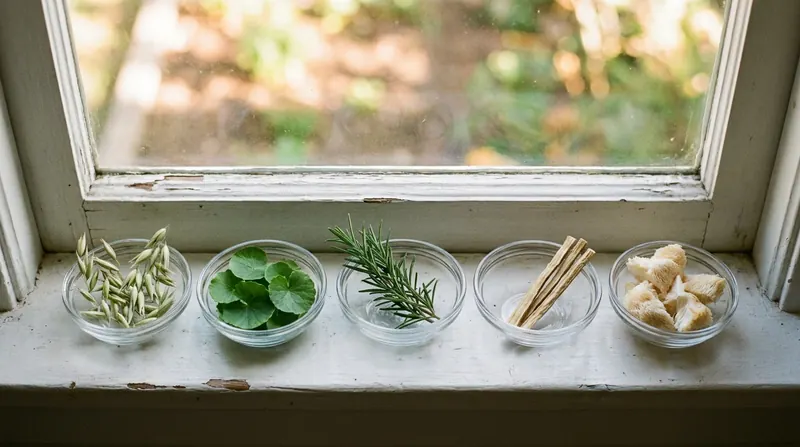
The five herbs are green oat seed, gotu kola, rosemary leaf, licorice root and lion's mane mushroom.
The label gives one number for all five together: 1,755 milligrams of extract in a serving.
It does not say how much of each herb is in that total.
That is common with blends and it matters later on this page, when I set each herb beside the study that tested it.
The other ingredients are organic vegetable glycerin and purified water.
Glycerin is what carries the herbs instead of alcohol, and it is why the seller describes the taste as sweet and spicy.
The label's directions are plain.
Shake the bottle, take two squeezes of the pipette, one to three times a day, in water or juice.

The seller puts a serving at about one and a half milliliters.
Thirty divided by one and a half is twenty, so the bottle holds twenty servings.
Twenty servings means each one takes about a twentieth of the level.
On a bottle this size, that is a movement of the liquid line you can see against a window after two or three mornings.
At one serving a day, the bottle lasts twenty days.
At two a day it lasts ten, and at three it lasts under a week.
That range is the most important choice you make before the first morning, because it decides how fast your refund drains.
One serving a day, at the same hour, is the pace I would choose for a test.
It stretches the bottle to its longest, and it keeps the level high for the longest time.
There is a second reason, and it has nothing to do with money.
If you change the amount halfway through, you will never know which amount you were judging.
The Taste, Because Half the Buyers Mention It
Before the studies, one practical matter that decides more tests than any study does.
If a man does not like the taste of something, he starts skipping mornings, and a test with skipped mornings is not a test.
The seller describes the flavor as sweet and spicy, herbal, to be taken alone or in water, juice or tea.
The sweetness comes from the glycerin, which is what carries the herbs in place of alcohol.
About half of the thirty-one public reviews of this bottle mention the taste.
Nearly all of them are kind about it, and one calls it unusual but not overpowering.
That matches what I would expect from the list.
Licorice root is sweet, rosemary is resinous, and a spoonful of glycerin softens both.
The label gives you the choice of water or juice.
Pick one and keep it for the whole test, because a change of glass is a change you will be tempted to read into.
Juice hides a flavor better than water does.
Water tells you more honestly what you are drinking, and it keeps the morning simple.
I chose a small glass of orange juice at the window, the same glass every morning.
It is the kind of decision that sounds too small to write down, and it is exactly the kind a notebook needs.
Same glass, same hour, same amount. The herbs are the only thing that should change.
How Long Each Herb Was Actually Tested
Now the second calendar.
Before you decide how many of the ninety days you need, it helps to know how many days the researchers used.
I went through the published studies of each of the five herbs that a man could fairly point to.
For each one I wrote down three things: how many people, how old, and how long.
Length is the number almost nobody mentions.
A study that ran for one morning and a study that ran for twelve weeks are answering different questions, even when they test the same plant.
One caution before the herbs, and it applies to all of them.
None of these studies tested this bottle, and none of them tested these five herbs together.
Each tested one herb, usually as a concentrated extract in a measured amount.
This bottle gives you all five in one total with no split, so no study below tells you what this bottle will do.
What the studies can tell you is how long a fair test ran, and that is exactly the number a ninety-day window needs.
Green Oat: Twenty-Nine Days in One Trial, Twelve Weeks in Another
The oat in this bottle is not breakfast oatmeal.
It is the seed head of the same plant, picked while it is still green and milky, before it ripens into grain.
Herbalists in Europe have used it that way for generations.
There are two proper trials of a green oat extract, and they point in different directions.
The first ran twenty-nine days.
One hundred and thirty-two healthy adults aged thirty-five to sixty-five took a green oat extract, and did better than the placebo group on a working-memory task and a multitasking test. [1]
That trial was paid for by the company that makes the extract, and the extract was a concentrated one.
Twenty-nine days is also the length I would underline: it fits inside the ninety with room to spare.
The second ran twelve weeks.
Thirty-seven healthy adults around the age of sixty-seven took fifteen hundred milligrams of green oat extract every day, and nothing changed on any measure of thinking the researchers used. [2]
Twelve weeks, men your age, and a null result.
I put it on the page because it is the trial most like the man reading this, and it found nothing.
So green oat's calendar reads like this.
One month in mostly younger adults, with a modest positive result; three months in older adults, with no result at all.
And its amount reads like this.
Fifteen hundred milligrams of oat alone in the longer trial, against 1,755 milligrams for all five herbs together in a serving of this bottle.
Even if oat were most of the blend, a serving would not reach the amount used in the trial that found nothing.

Gotu Kola: Two Months, and Seven People to a Group
Gotu kola is a low creeping plant with small round leaves.
In much of South and Southeast Asia it is eaten as a salad green, and it has a long history in traditional practice there.
Its best trial for a man past sixty was small and ran two months.
Twenty-eight healthy older adults were split into groups, and those on the highest amount, 750 milligrams a day, did better on working memory and rated themselves more alert than the placebo group. [3]
Twenty-eight people in total, which works out to about seven in each group.
That is a very small study, and its authors used a water extract rather than a liquid in glycerin.
Then there is the look across all the trials.
A 2017 analysis that pooled the randomized studies of gotu kola found no significant effect on thinking-test scores, though people did rate themselves more alert. [4]
That is an honest split, and I will leave it as one.
People said they felt more alert; the tests did not move.
Now the calendar.
Two months is about sixty days, which fits inside the ninety with a month to spare.
And the amount.
Seven hundred and fifty milligrams of gotu kola alone, against 1,755 milligrams for all five herbs together in a serving here.
Sixty days, seven people to a group, and a pooled result of nothing on the tests.
One more fact about gotu kola that belongs on the page, and it is about caution rather than effect.
There are rare reports of harm to the organ that processes what you swallow linked to gotu kola products.
If you notice unusual tiredness, dark urine, or yellowing of the skin or eyes, stop and speak to your clinician.
That is a rare event, and it is also the kind of thing a man should know before he starts rather than after.

Rosemary: A Single Morning, and a Dose That Went the Wrong Way
Rosemary is the one herb in this bottle that is already in your kitchen.
It is also the one whose study is the shortest of all: a single morning.
Twenty-eight adults with an average age of seventy-five took a single dose of dried rosemary leaf on different days, in a crossover design.
At 750 milligrams, close to what a cook might use, their speed on memory tasks was faster than on placebo. [5]
At six thousand milligrams, a very large amount, the effect ran the other way.
Their memory speed was slower than on placebo. [5]
More was worse.
That is the single most useful sentence in all the rosemary research I could find, and it applies to more than rosemary.
The calendar here is short.
One morning per dose, which tells you about the hour after a serving and nothing about a month of them.
And rosemary's lesson for a test at home is about amount, not time.
Pick one serving a day and hold it; do not reach for a second and a third on the theory that more must help.

Lion's Mane: Eighty-Four Days at 3.2 Grams
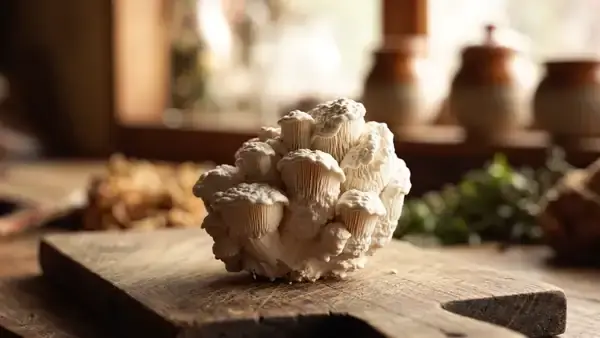
Lion's mane is a shaggy white mushroom that grows on hardwood.
It is eaten in Japan and China, and it is farmed widely in the United States now.
It carries the longest trial of the five herbs in adults over fifty, and it is the trial I would set my calendar by.
Thirty-one healthy adults over fifty in Japan took a daily preparation of the mushroom's fruiting body, 3.2 grams a day, for twelve weeks.
They scored higher than placebo on a standard mental-status test, and a visual-memory test in the same trial did not change. [6]
Eighty-four days.
That is the longest honest test anybody has run of any herb in this bottle in men your age, and it fits inside ninety, just.
Six days of slack is not a lot.
If the package spends five of them on a truck, the window and the trial end within a day of each other.
Now the amount, which is the harder number.
Three point two grams is 3,200 milligrams of lion's mane alone, every day.
A serving of this bottle is 1,755 milligrams for all five herbs together.
Even if the bottle were nothing but lion's mane, a serving would be a little over half the daily amount in that trial.
There is a second study, and it is about a single dose.
Forty-one healthy adults aged eighteen to forty-five took 1.8 grams once and did a color-and-word attention task faster an hour later, while twenty-eight days of the same supplement showed only a trend that did not reach significance. [7]
That is a pilot study in people young enough to be your children.
Its authors asked for caution, and I pass that caution on to you.
Lion's mane's calendar reads eighty-four days and its amount reads 3,200 milligrams. This bottle can meet the first number and cannot meet the second.
Licorice Root: No Memory Trial, and There for the Flavor
The fifth herb is licorice root, and its entry on my calendar is blank.
I could not find a trial of licorice root on memory or attention in healthy adults to put there.
That is not a criticism.
Licorice root has been in herbal blends for centuries, very often for its taste, and a sweet root makes sense in a glycerin extract that is meant to be taken in juice.
But I will not borrow a study from somewhere else to fill the square.
A blank square is a finding, and it stays blank until somebody fills it.
Licorice root does carry its own caution, which is about amount and time rather than memory.
The ingredient guide linked at the foot of this page sets it out in full.
If you take anything daily, show the bottle to your pharmacist before the first serving. Licorice root is one reason why.

The Research Calendar Beside the Refund Calendar
Now put the two calendars side by side, the way I did on the window frame.
On the left, the refund: ninety days from the date you pay.
On the right, the studies: how many days each herb was tested for.
Rosemary: a single morning. [5]
Lion's mane, the short study: a single morning, then twenty-eight days. [7]
Green oat: twenty-nine days in one trial, [1] eighty-four in the other. [2]
Gotu kola: about sixty days. [3]
Lion's mane, the long study: eighty-four days. [6]
Licorice root: no study to set on the calendar.
Every study length on that list fits inside ninety days. Not one of them runs past it.
That is the best thing I can say about these terms, and I mean it.
The seller gives you a window long enough to run the longest test anyone has run of any herb in the bottle.
Most return windows in this business are thirty days.
A thirty-day window would cover the oat trial and nothing else.
But put the level of the liquid back into the picture.
An eighty-four day test at one serving a day uses eighty-four servings, and a bottle holds twenty.
That is 126 milliliters, or a little over four bottles.
You would need five bottles to run it, and you would open the fifth around day eighty-one.
The window can cover the length of the longest trial. It cannot cover five empty bottles.
So the long window and the long test are two different things.
The window protects your decision; it does not protect a finished experiment.
Once you see that, the right way to use ninety days becomes much simpler.
You decide early, while there is still liquid in the glass, and you only commit to the long run after you have decided.
Three Ways to Run the Test Inside Ninety Days
Here are the three plans I wrote out at the kitchen table.
Each one is honest about what it protects and what it spends.
Before the plans, I set the bottle on the sill once more and looked at it whole, the way you would look at a tool before a job.
Every plan below is built on the four facts in this small list, so they are worth having in one place.
The first plan: one bottle and a line at the halfway mark.
Order one bottle, take one serving a day at the same hour, and mark the level with tape every few mornings.
Draw a line at half on the tape before you start.
The level reaches it around day ten, and day ten is your first decision.
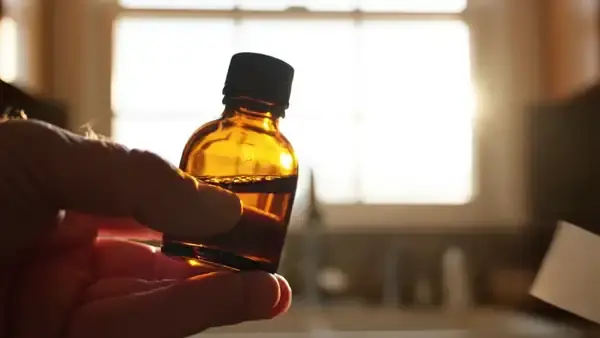
If you feel no difference worth paying for by then, stop and send the bottle back with half of it still inside.
The terms promise a partial refund on what remains, and half a bottle is a good deal more than nothing.
The weakness of this plan is plain.
Ten days is shorter than every study on the calendar except rosemary's single morning, so a quick verdict is a thin one.
The second plan: two bottles, one sealed in the cupboard.
Order two bottles at once, open one, and put the other away with its seal unbroken.
Run the open bottle at one serving a day to the end.
That is twenty days, which is close to the length of the shorter oat trial and a third of the way to the gotu kola study.
On day twenty, decide.
If the answer is no, the sealed bottle goes back full, and full is the one amount the terms put at a full refund.
Under the second plan, the most you can spend on a no is one bottle and the shipping.
If the answer is yes, you open the second bottle and carry on to day forty.
You have lost nothing by waiting, and you still have fifty days of window ahead of you.
This is the plan I would choose, and it is the one I set up at my own window.
It uses the terms exactly the way they are written: the generous part covers the bottle you have not touched.
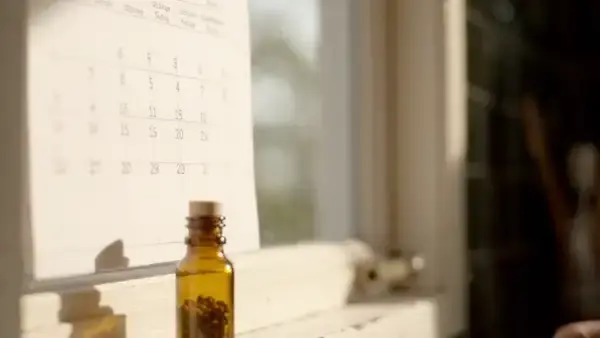
The third plan: the long run, the length of the longest trial.
Eighty-four days at one serving a day, five bottles, the same hour every morning.
This is the only plan that matches a study length for the herb with the longest trial.
It is also the plan the refund terms protect least, because by the end of it every bottle is open and most are empty.
If you want to run it, run it after the second plan, not instead of it.
Decide on the first bottle, and only then buy the rest as a purchase rather than as a test.
Nobody should buy five bottles on the strength of a ninety-day window. The window protects the first decision, not the fifth bottle.
There is one more choice that sits under all three plans.
Write the date you paid, not the date the box arrived, in the circle on your calendar.
The clock in the first sentence of the terms starts at purchase.
A man who counts from the porch will be five days late and not know it.
The Second Plan, Worked Through Week by Week
Plans are easy to agree with and hard to follow, so here is the second plan the way it runs on the calendar.
I wrote it on the back of an envelope and pinned it under the card with the terms.
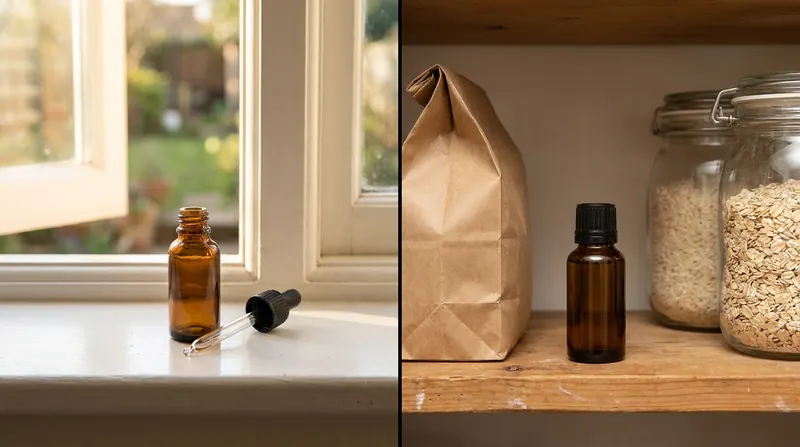
Day one is the day you pay.
Circle it, count ninety squares forward, and circle that day too.
The first days are the delivery days.
Nothing happens except the clock, which is already running.
The morning the box arrives, check both seals.
If either is broken, call the Saturday number before you do anything else; the label says not to use a bottle with a broken seal.
Put one bottle in the cupboard, unopened, somewhere you will not reach for it by accident.
Put a strip of tape down the side of the other and mark the level before the first serving.
The first week is seven servings, one a day, at the same hour.
Mark the tape at the end of it, and write your one line in the notebook each evening without reading back.
The second week is the same, and it is the week most people give up on a routine.
If you miss a day, write down that you missed it; a missed day recorded is worth more than a perfect week invented.
The third week ends somewhere around day twenty, when the open bottle runs dry.
That is decision day, and it should fall a little before day thirty on the calendar, with sixty days of window still ahead of it.
On decision day, read the notebook once, from the first page to the last, and ask one question: is the last week different from the first?
If the honest answer is no, the sealed bottle goes back through the form on the seller's site.
The terms put a full bottle at a full refund, and you have spent one bottle and the shipping to learn something true.
If the answer is yes, or maybe, open the second bottle and run it the same way.
Day forty or so is your second decision, and it still sits comfortably inside the ninety.
What you should not do is decide on a good Tuesday.
One good morning is weather. Three weeks of lines in a notebook is climate.
What a Man Can Notice at His Own Kitchen Table
The studies had something you do not have at home.
They had a placebo group, and they had tests given the same way at the start and at the end.
You have one person, you know what you are taking, and you want it to work.
That is not a criticism; it is the condition every one of us is in when we try anything at home.
So the honest question is not whether you can run a trial.
It is whether you can keep your own record clean enough that the answer on day twenty means something.
Here is the method I wrote on the back of the card.
It costs nothing, and it takes about thirty seconds a day.
- The same serving, one a day, at the same hour, in the same glass of water or juice.
- One line in a small notebook each evening, written before you think about the bottle.
- The same three things in that line every day: did a name come when you wanted it, how did the late afternoon go, anything unusual about the day.
- A note of anything that changed besides the bottle: a bad night, a trip, a cold, a new coffee habit.
- No reading back through the notebook until the decision day.
The last rule is the one people break.
If you read your notes every evening, you start writing the notes you expect.
The second-to-last rule matters nearly as much.
A man who had a poor week for some other reason will blame or credit the bottle for it, unless he wrote the other reason down.
On decision day, read the notebook once from the start.
Compare the first week with the last week, not your best morning with your worst.
And be honest with yourself about the size of what you are looking for.
The studies on this page found modest differences on tests, where they found anything; nothing in them promises a change a man would notice across the room.
A notebook, a pencil, one line a night, and no peeking.

There is one more thing the notebook will tell you that the studies cannot.
It will tell you whether you actually took the bottle every day.
One of the buyers quoted further down this page said exactly this about herself.
She had not been taking it on a regular basis, and she knew she could not judge it until she did.
Twin Falls, and a Telephone That Is Answered on Saturdays
A return window is only as good as the people at the other end of it.
So I looked at who they are, where they are, and how you reach them.
The company is Plant Therapy, Inc.
Its address is 621 Washington Street South, Suite 100, in Twin Falls, Idaho.
Twin Falls is a small city in the south of the state, on the rim of the Snake River canyon.
It is not a place a company puts an address to look impressive; it is a place a company puts an address because that is where it works.
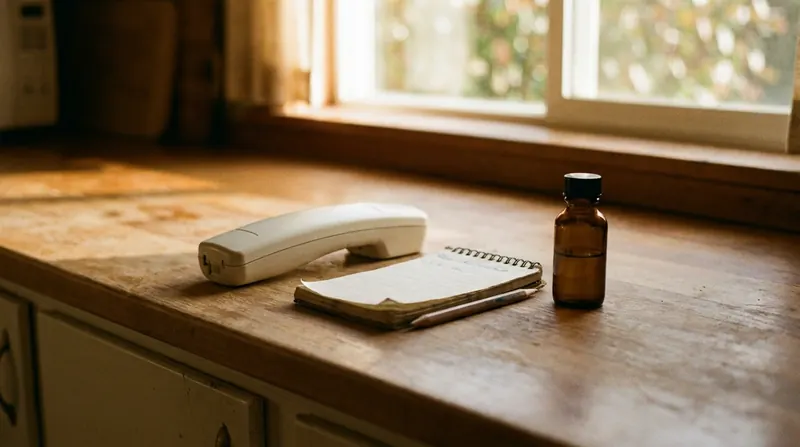
The customer telephone number is 800-917-6577.
It is answered Monday through Saturday, eight in the morning to six in the evening, Mountain time, and it is closed on Sunday.
Saturday hours are worth something to a man who worked all week for most of his life.
You can make the call on the morning you have time to make it.
The email address is cs@planttherapy.com.
The return itself starts with a form on the seller's site, and the seller asks for up to forty-eight business hours to process it.
Most of what Plant Therapy sells is not this bottle.
It is mainly an essential-oil company, with bath and body products, children's lines and home goods, and a shelf of supplements beside them.
That has one practical consequence for these terms.
The account credit you get after ninety days is spendable on a large catalog, not a single product.
And it has one consequence for the bottle.
It is a sideline for this company rather than its flagship, and a man should know that when he buys it.
What the label carries that I can check is its organic certificate.
It is certified organic by ECOCERT, an independent certifier, and it states that it is made in the USA.
Organic describes how the herbs were grown, and it is audited.
It says nothing about how much of each herb is in a serving, and I keep those two things in different columns.
A street, a suite number, a Saturday telephone and a form. That is more than many bottles on the same shelf can offer.
Three Things the Return Page Does Not Say
Here is the card from the window frame, word for word, before the three questions it leaves standing.
I left out three words from the first sentence and put three dots where they were.
They are the seller's name for the promise, which a page like this one is not allowed to repeat, and the dots change nothing about what the sentence offers.
I read the return page three times at the window, and three questions were still standing at the end.
None of them is a trap; all three are the kind of thing a man should ask before he needs the answer.
First: who pays to ship the bottle back?
The retail return terms do not say. The wholesale terms on the same page say that wholesale buyers pay, which tells you nothing about a single bottle.
Second: how is "the amount of product remaining" measured?
The page does not say whether it is weighed, judged by eye, or estimated from the date.
Third: does the account credit after ninety days expire?
The page says the credit is given; it does not say for how long it can be used.

I would ask all three on the telephone before ordering.
Write down the date, the time and the first name of the person who answers.
Then put that note with the calendar on the window frame.
If you ever have to send the bottle back, you will not be arguing from memory.
A generous window with three open questions is still a generous window. It is simply better with the answers written down.
What Thirty-One Buyers Wrote
The seller's product page carries a public review system with thirty-one reviews of this bottle on it.
I read every one of them, which on a count that small is possible and worth doing.
Twenty-four gave five stars, six gave four, and one gave two.
Nobody gave one or three.
An average of 4.7 stars is high, and I will not pretend it is not.
But an average tells you how pleased people were with a purchase, which is a different question from what five herbs did.
So I read them for something else.
I read them for how long people had been taking the bottle when they wrote.
That turned out to be the most useful thing in the whole set.
A good number of the reviews were written early, at a week or two, and the writers said so.
I left out reviews that described things the bottle does not contain, that mentioned a health condition, or that compared it with something else a person takes.
I left out one that used a word I cannot print here, and the handful whose writers were not confirmed buyers.
I kept the ones that tell a man something useful about time and about taste, and I kept the two-star review on purpose.
Here they are, word for word, from the seller's own review system.

New to the product, have not seen clear results as I have only been taking this for 2 weeks. The taste is unusual but not overpowering. Looking forward to more results with time and consistency. Love the fact it's organic. Overall, satisfied with the product!

I haven't used this on a regular basis, and will start doing that. Then, I can tell if I feel a difference.

I waited to write a review until my bottle was empty. And it got empty fast! Too fast. The only negative in my opinion.

Minimal taste, seems to keep me focused

The taste is pleasant but I haven't noticed an improvement in my "brain power".

I've had this quite a while now and sadly I just didn't notice any difference. The taste is pretty good though. I was really hoping it would help.
Read them against the calendar and they sort themselves.
Jase wrote at two weeks and said, fairly, that two weeks was too soon to tell.
Roxanne had not been taking it every day and knew that she could not judge it until she did.
That is the notebook rule, written by a customer before I wrote it.
Marilyn waited until the bottle was empty, which is the most careful thing anybody in the set did.
And she found the same thing the arithmetic finds: it empties fast.
Rebecca says it seems to keep her focused, and she chose the word "seems" herself.
Beverly liked the taste and noticed no change.
Stephanie had it quite a while, noticed no difference, and gave it two stars.
If Stephanie had kept a second bottle sealed in her cupboard, the terms would have sent that bottle's money back in full.
Three of the six say the taste is pleasant or mild, and four say it is too soon or that they felt no change. That is a fair picture of a bottle like this one.
If the picture sounds like one worth testing, there is a way to do it that costs you as little as possible if you turn out to be Stephanie.
It is the second plan: two bottles, one sealed, a decision on day twenty.
Plant Therapy, Inc., Twin Falls, Idaho · 30 mL, twenty servings · ninety days from purchase, opened or not
Who Should Ask Before the First Serving
The label asks you to check with your clinician first if you have a health condition or take anything daily.
That is the maker's own instruction, and it is the right one.
For most men over sixty, "take anything daily" covers a lot of kitchen counters.
If that is you, take the bottle itself to your pharmacist and ask before you open it.
Two of the herbs give that advice more weight than usual.
Gotu kola, because of the rare reports I described in its section, and licorice root, because of its own caution about amount and time.
The pharmacist costs nothing to ask, reads the label in thirty seconds, and knows what else is on your list.
That conversation is the cheapest insurance on this page.
Keep the bottle out of reach of children, as the label says.
And do not use it if the tamper-evident seal is broken when it arrives; that is also on the label, and it is also a reason to call the Saturday number.
The Other Lines on the Same Calendar
There is a conversation I have with every man who shows me a bottle at this window, and it comes before the bottle.
None of what follows is for sale, and all of it can go on the same calendar.
Water first.
In a Berlin study of 1,111 adults aged sixty to eighty-nine, the third of them who were measurably short of water did worse over time on a processing-speed test than the rest. [8]
A later review of eighteen studies in 33,707 adults over sixty reached the same place more cautiously.
The link between being short of water and poorer scores on thinking tests is there, but the evidence for it is sparse. [9]
Both are observational, and neither proves cause.
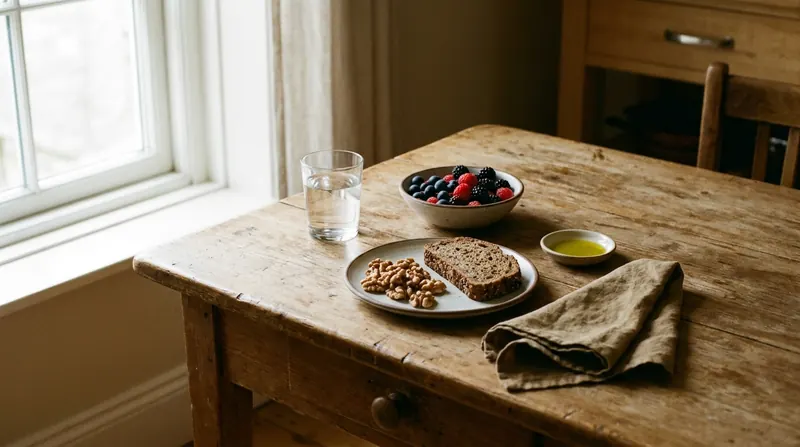
A glass of water at the window costs nothing, and it is the one glass on this page with nothing to check against your list.
Then the pattern of what you eat, over years rather than weeks.
In a Brazilian study of 10,775 adults followed for about eight years, those who ate the most from the ultra-processed shelf slipped somewhat faster on tests of thinking and planning. [10]
And in a three-year randomized trial of 604 older adults, a group eating a Mediterranean-style pattern and a group eating a little less both improved their thinking scores, with no significant difference between them. [11]
Vegetables, beans, nuts, whole grains, olive oil, fish and berries are ordinary groceries, and the studies behind them ran for years, not days.
Then your hearing and your eyesight.
Straining to catch what someone said, and then not being able to repeat it back, looks exactly like not remembering it.
A hearing check and an eye test are appointments, not purchases.
Put them on the calendar, in the same ninety days, and you will have learned something whatever the bottle does.
Every line in this section is cheaper than a bottle, and none of it is sold by anybody.
If You Order, the Order I Would Place
If you have read this far and the bottle still sounds worth a fair test, here is exactly how I would place the order.
There is no button beside this column, so this is the place to decide.
Order two bottles, not one and not five.
Open one, and put the other away in the cupboard with its seal unbroken.
Circle the day you pay on a calendar, count ninety squares, and circle that day too.
Put a strip of tape on the open bottle and mark the level the first morning.
One serving a day, same hour, same glass, and one line in a notebook every evening.
Decide on day twenty, with the sealed bottle still full.
Before any of it, ask your pharmacist if you take anything daily.
And call the Saturday number with the three questions from the return page.
This page prints no price.
The seller sets it and changes it, and a sale this week is not the price next month.
Look at the price on the day you look, and look at whether you are placing an order or starting a subscription.
They are different purchases, and only one of them is what this page describes.
A word on that subscription, because it is the one place the terms and the test pull in different directions.
The seller waives shipping only on recurring subscription orders, and that is a real saving on a small bottle.
But a subscription sends the next bottle on the schedule you choose when you sign up, whether or not you have decided anything yet.
A test run on a subscription can have its third bottle on the porch before the notebook has an answer.
So I would place the first order as a plain order, two bottles, and pay the shipping.
If the notebook says yes on day twenty or day forty, that is the moment to think about a subscription, not before.
The same goes for any sale price on the day you order.
A good price is a reason to buy two bottles instead of one; it is not a reason to buy five, and it is never a reason to skip the sealed bottle.
The whole plan costs one bottle if the answer is no. Everything above is there to keep it that way.
The five herbs in this bottle, what each one is, the amount the label gives and the study behind each name are written out in full in the ingredient guide linked at the foot of this page.
That guide also carries the cautions for each herb, the references in full, and the disclosures this page is required to make.
The amber ounce from Twin Falls, with ninety days behind it
An organic, alcohol-free liquid herbal extract with five botanicals traditionally used for focus and clarity.
SEE THE AMBER OUNCE AND ITS TERMSSold by Plant Therapy, Inc., Twin Falls, Idaho · 30 mL, about twenty servings · ninety days from purchase, opened or not; the refund on an opened bottle follows what remains · 800-917-6577, Monday to Saturday
Questions from the kitchen table
Is this medicine?
No. It is an organic herbal supplement in a glycerin base, and it is not meant for any medical condition.
How long does one bottle last?
Twenty servings. At one serving a day that is twenty days; at three a day it is under a week.
Can I send it back if I have opened it?
Yes, within ninety days of purchase. The seller offers a partial to full refund based on how much is left in the bottle.
What happens after ninety days?
The seller gives account credit for the return rather than money back.
How long were the herbs tested in studies?
From a single morning for rosemary to eighty-four days for lion's mane. [5] [6] Every study length fits inside ninety days.
Does it contain alcohol?
No. The herbs are carried in organic vegetable glycerin and purified water.
How do I take it?
Shake the bottle and take two squeezes of the pipette in water or juice, one to three times a day, as the label directs.
Should I ask anyone before starting?
Yes, if you have a health condition or take anything daily. Show the bottle to your pharmacist first.
Are the reviews real?
Yes. The seller's page carries thirty-one; I read all of them and quote six, including one at two stars.
The Whole Plan on One Index Card
- A one-ounce amber bottle of five organic herbs in glycerin, 1,755 milligrams of extract a serving with no split printed, twenty servings to the bottle.
- Ninety days from the date you pay, not the date it arrives; opened bottles are accepted.
- On an opened bottle the refund is partial to full, based on the amount remaining; after ninety days, account credit.
- Mark the level with tape against the window: each serving is about a twentieth of the bottle.
- Study lengths: rosemary one morning, [5] green oat twenty-nine days [1] and eighty-four days with no result, [2] gotu kola about sixty days, [3] lion's mane eighty-four days at 3.2 grams a day. [6]
- Pooled gotu kola trials found no effect on test scores, only on how alert people felt. [4]
- Licorice root has no memory trial; it carries its own caution, set out in the ingredient guide.
- Plan two: two bottles, one sealed, one serving a day, a decision on day twenty.
- A notebook line every evening, written before you think about the bottle, and no reading back until decision day.
- Thirty-one reviews, average 4.7; several written too early to judge, and one at two stars.
- Plant Therapy, Inc., 621 Washington St. S., Suite 100, Twin Falls, Idaho; 800-917-6577, Monday to Saturday; cs@planttherapy.com.
- Before any of it: water, [8] [9] the pattern of what you eat, [10] [11] your hearing and your eyes.
Day Ninety
The second circle on my calendar is still a long way off.
The tape on the open bottle has three pencil marks on it, and the second bottle is in the cupboard behind the flour.
I have not decided anything, and I will not say more about the bottle than the studies do.
What I can say is what I think of the terms, after reading them at this window more times than was strictly necessary.
They are among the best I have read on a bottle of this kind.
Ninety days is long enough to cover every study of every herb inside it, and an opened bottle is still welcome back.
The one thing a man has to understand is that the generous part of the window lives in the liquid, not in the calendar.
Spend the liquid slowly, keep one bottle sealed, and decide while there is something left to send back.
That is the fairest test anybody can run on this bottle at home.
It is the one I set up at my own window, and it is the one I would tell my brother-in-law to run.
Two circles on a calendar, a strip of tape, and a sealed bottle behind the flour.
One bottle to open, one to keep sealed
An organic, alcohol-free liquid herbal extract with five botanicals traditionally used for focus and clarity.
SEE THE AMBER OUNCE AND ITS TERMSPlant Therapy, Inc., 621 Washington St. S., Suite 100, Twin Falls, Idaho · cs@planttherapy.com · 800-917-6577, Monday to Saturday, 8 to 6 Mountain · ninety days from purchase
P.S. If you keep two numbers from this page, keep these.
Ninety days, counted from the day you pay.
Twenty servings, each one about a twentieth of what the refund can send back.
P.P.S. If a worry about your own memory has been with you for a year, speak to your own clinician before you buy anything at all.
A small amber bottle was never going to answer a question that a proper appointment answers in an afternoon.